
How Much Does Septic Tank Pumping Cost?
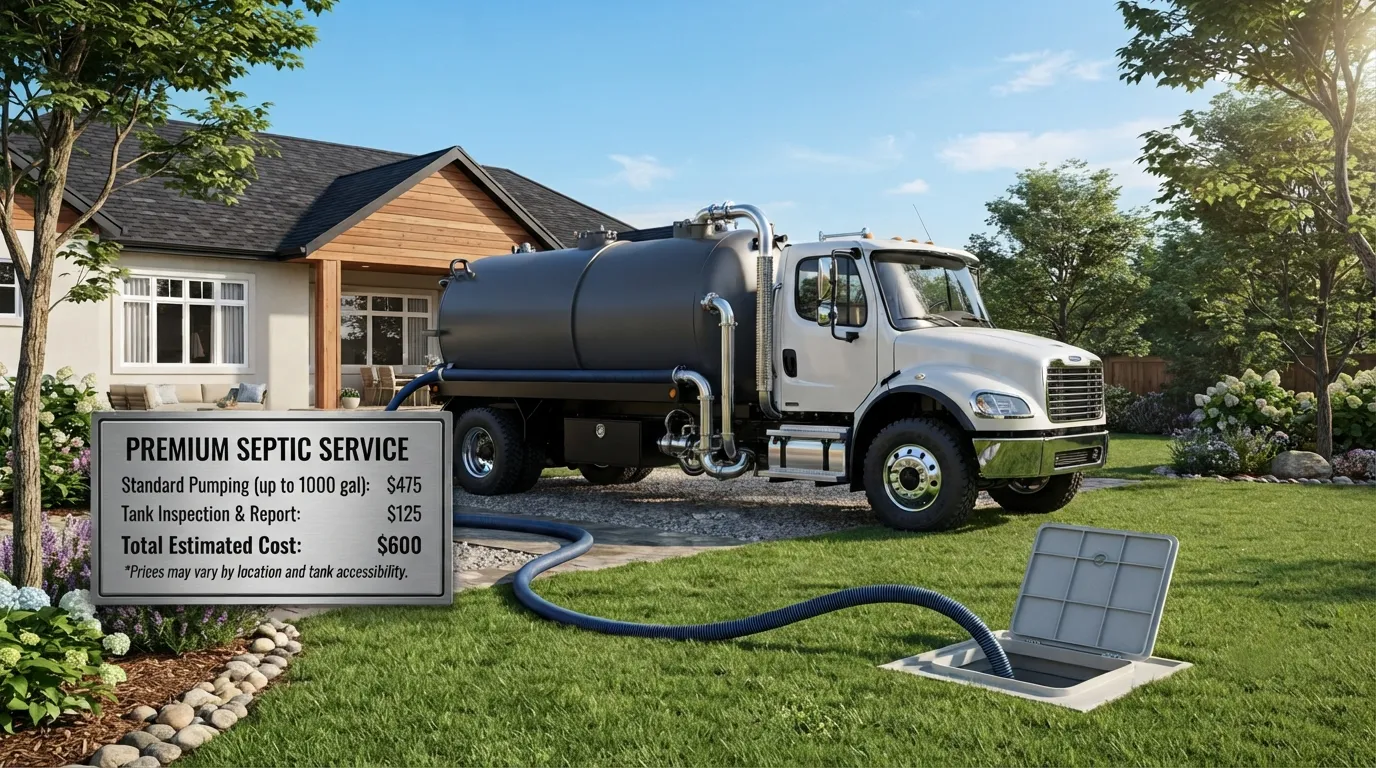
Most Warren homeowners pay somewhere in the 150 to 300 dollar band for a routine pump-out, the same range you will see on septic pumping service jobs across Macomb County. Where you land in that range depends on tank size, how deep the truck has to reach, and whether the lid is buried or already exposed. A typical residential septic tank gets pumped every 3 to 5 years, and that interval is driven mainly by tank size and household size, not the calendar. If you are not sure where you are in that cycle, how often to pump a septic tank walks through the signs that push the timeline earlier. Weekend service costs more than a weekday slot, so if the schedule is flexible, a weekday appointment saves money. Homes on well and septic outside city sewer lines, common in parts of Warren, tend to need more frequent service than homes tied into municipal systems. If your tank has never been located or mapped, that adds time to the first visit, which can push the bill toward the higher end of the range.
What Affects Septic Tank Cleaning Prices?
Access is the biggest swing factor in septic tank cleaning prices. A tank with a buried lid under landscaping costs more to service than one with a visible riser, because someone has to dig before the truck can even start. Tank size matters too. A 1,000 gallon tank pumping cost sits differently than a larger commercial-grade tank, and household size over the years affects how fast solids accumulate. Distance from Warren also plays a small role in scheduling, since a call in Roseville, 6.1 miles east, or Eastpointe, 7.6 miles southeast, routes differently than one inside city limits. If you are dealing with a grease interceptor instead of a home septic tank, that is a different service entirely. A grease interceptor is pumped once fats, oils, grease and solids reach 25 percent of the liquid depth, and that job falls under grease trap pumping, not standard septic work. Restaurants and food trucks near Warren often need that service on a tighter schedule than a residential tank. If you are watching for trouble signs before calling anyone, septic tank warning signs covers what backups and slow drains usually mean.

Is Septic Pumping Cheaper Than a Holding Tank?
Septic pumping and a holding tank solve different problems, so cost comparison only makes sense if you know which one you actually need. Pumping services an existing in-ground septic system. A holding tank is a temporary above-ground solution, useful when a system has failed and repairs are days out, or when a property under construction has no septic system yet. If your Warren property needs interim capacity while a system gets fixed or installed, holding tank rental is the right page, not a pump-out quote. For active emergencies, like a backup on a weekend before a family gathering, emergency septic service covers faster response than a scheduled pump-out. Construction sites without hookups yet often pair a holding tank with portable toilet rental or standard porta potty rental so crews have facilities from day one. None of that replaces a septic pump, it just covers the gap before one is possible.

How Often Should I Pump My Septic Tank?
Every 3 to 5 years is the standard interval for a typical residential septic tank, based on tank size and household size, and it is the range most Warren homes fall into without special circumstances. Larger households, garbage disposals, and heavy laundry use all push that number down. A tank serving a rental property or a home with a home business might need attention closer to the 3-year mark. If you are renovating and running extra water through fixtures during the work, that stress can also shorten the interval, which is worth flagging if you are already scheduling a home renovation porta potty for the crew. Skipping a scheduled pump-out does not save money. It just moves the cost to an emergency call, which tends to land at the higher end of the day-rate range instead of the typical figure. Keeping a simple log of pump dates, right next to the septic tank cleaning receipts, makes it easy to catch the interval before a backup forces the issue.
Do I Need a Permit for Septic Pumping in Warren?
Routine septic pumping itself generally does not need a city permit, but any septic system repair, replacement or new installation does typically require review, and that is something to confirm directly with the City of Warren before work starts. Pumping is maintenance. Digging, replacing a tank, or installing a new leach field is construction, and that is where local rules get involved. If your situation looks more like a system failure than a routine pump-out, treat it as a bigger project and check with the city early rather than after a contractor is already on site. This is also the point where septic tank pumping cost stops being the right question, since repair and installation pricing works differently than a maintenance visit. For unrelated site work happening at the same address, like a dumpster for renovation debris, roll-off dumpster rental and dumpster permit requirements cover permitting for that separately.
| service | duration | low | typical | high |
|---|---|---|---|---|
| septic pumping | day | 150 | 250 | 300 |
| septic pumping | weekend | 50 | 100 | 150 |
How much does a 1,000 gallon septic tank pumping cost?
A 1,000 gallon tank generally falls within the standard 150 to 300 dollar day-rate range in Warren. Exact cost depends on access, sludge buildup and whether the lid needs to be uncovered first. Buried lids add time and cost.
How do I find septic tank pumping cost near me?
Local pricing depends on tank size, access and scheduling, more than distance. Warren Porta Pros services Warren and nearby communities including Madison Heights and Roseville. A quote request through request a quote gets an exact figure for your address.
Is weekend septic service more expensive?
Yes. Weekend septic calls run 50 to 150 dollars as a premium add-on over the standard day rate. Weekday scheduling is cheaper whenever the timeline allows it, since crews are not paying overtime rates to work Saturday or Sunday.
What is the difference between septic pumping and septic cleaning?
Pumping removes liquid and sludge from the tank. Cleaning can include that plus inspecting baffles, checking the outlet filter and confirming the tank is structurally sound. Most routine service calls are pumping. See septic tank cleaning for what a full visit covers.
Can I pump my own septic tank to save money?
Not safely or legally in most cases. Septic waste requires proper transport and disposal, and DIY pumping risks damaging the tank or leach field. A scheduled call through septic pumping service costs less than a repair caused by a mistake.
Next step
Get a delivery date
Tell us the address, the dates and the headcount. We size the order and confirm the route.