
Where should a porta potty go on a job site or yard?
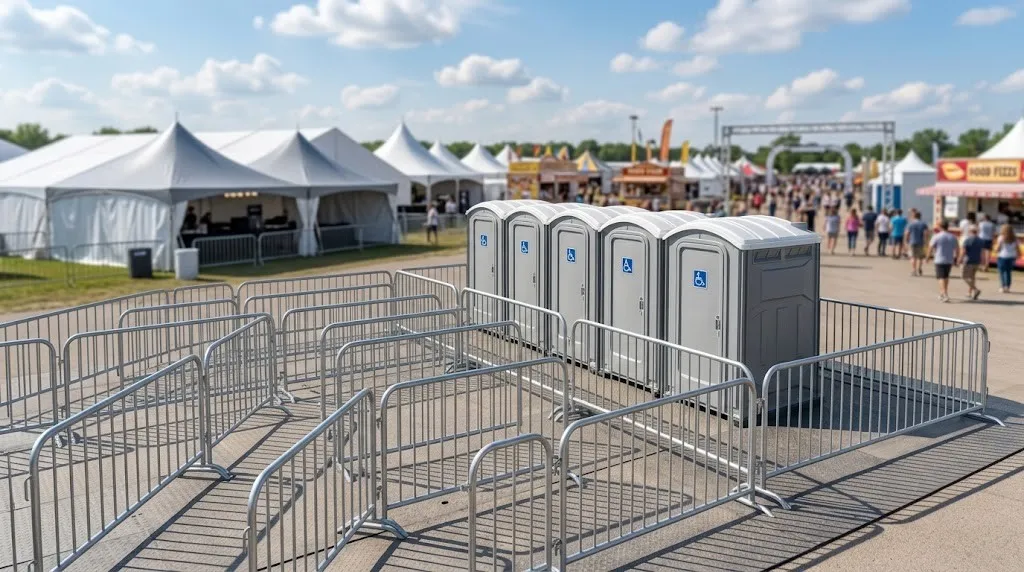
Pick flat, stable ground first. Grass, gravel and asphalt all work, but soft dirt after a storm does not; a 60 to 70 gallon tank full of waste is heavy, and the unit can tip or sink into mud. Keep it within reach of the service truck, since the crew needs a clear path to pump and restock. If you are placing units on a construction site, OSHA portable toilet requirements under 1926.51(c) set the ratio: one toilet for 20 workers or fewer, scaling up from there. For ADA units, ADA restroom requirements call for a 60 inch turning circle under ADA Standards 304.3.1 and a clear route at least 36 inches wide per section 403.5.1, so skip narrow side yards and tight gaps between fencing panels. Warren properties with alleys or shared driveways should treat those same width rules as the deciding factor, not just curb appeal. If you are unsure how many you need for a crew size or guest count, our placement calculator guide walks through it step by step.
Do I need a permit to place a porta potty or dumpster in Warren?
Maybe, depending on where the unit sits. Placement fully on private property, like a driveway or a fenced yard, usually needs no city sign-off. Placement in the public right of way, on a street shoulder or in front of a lot line, is a different question, and that needs confirming with the City of Warren before delivery. The same logic applies to dumpster placement permit questions: a roll-off sitting on your own concrete pad is one thing, one blocking a sidewalk or lane is another. Rather than guess at a dumpster placement permit cost, call the city and ask directly, then let Warren Porta Pros coordinate delivery around whatever answer you get. Our porta potty permit requirements page and dumpster permit requirements page both cover this same right-of-way distinction in more depth, and the same clearance logic shows up in our roll-off dumpster page and the general porta potty rental service page for Warren.
How much clearance does delivery actually need?
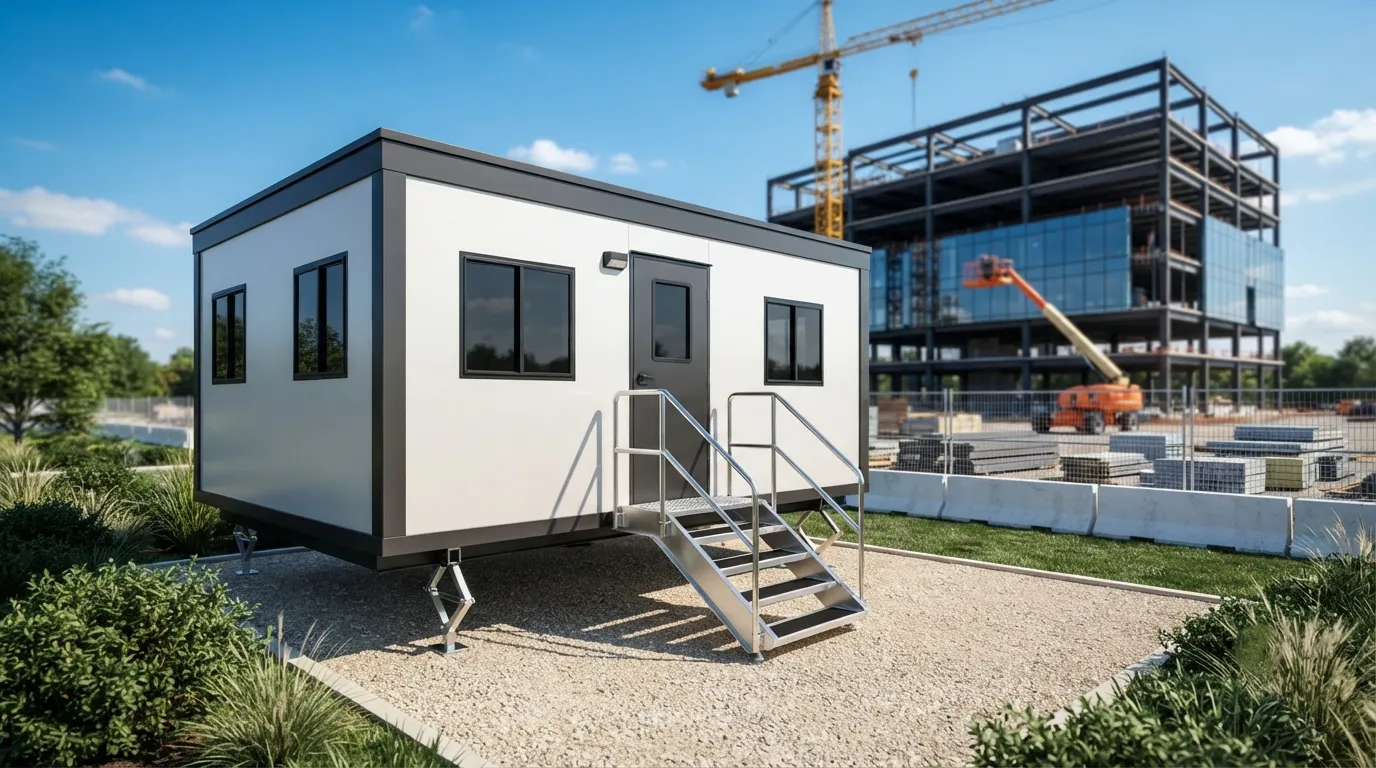
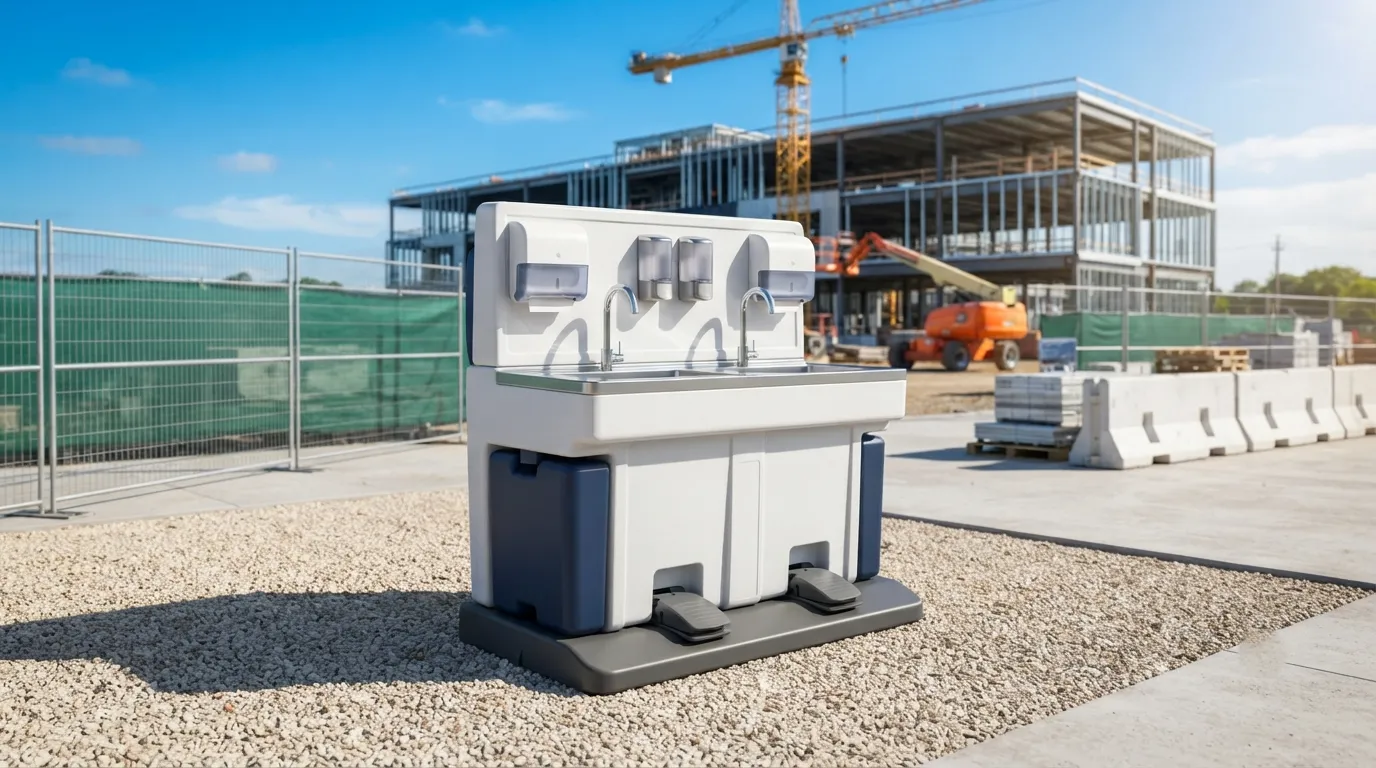
A roll-off truck needs about 60 feet of straight clearance behind it to set a dumpster down safely, so a short driveway or a tight cul-de-sac can rule out certain spots entirely. Measure your space before booking a 10 yard, 20 yard, 30 yard or 40 yard dumpster, since the truck angle does not change with size. A standard portable toilet needs far less: the unit itself runs about 44 by 48 inches on the ground and stands roughly 92 inches tall, so it fits in spots a dumpster never could. Restroom trailers are the middle ground; a 2 stall or 4 stall restroom trailer needs a level pad and enough backing room for the tow vehicle, closer to dumpster requirements than toilet ones. Storage equipment has its own quirks too. A mobile office trailer rental needs solid ground under the jacks, and older units sometimes need mobile office trailer replacement doors before they will seal properly against Michigan weather; ask about condition when you book. If you are placing a handwashing station rental or a portable sink rental nearby, note that some Ozark River portable sink replacement parts, like pumps and faucet handles, are stock items, so a unit with a worn part does not need to be swapped out entirely.
Why does ground surface and slope matter so much?
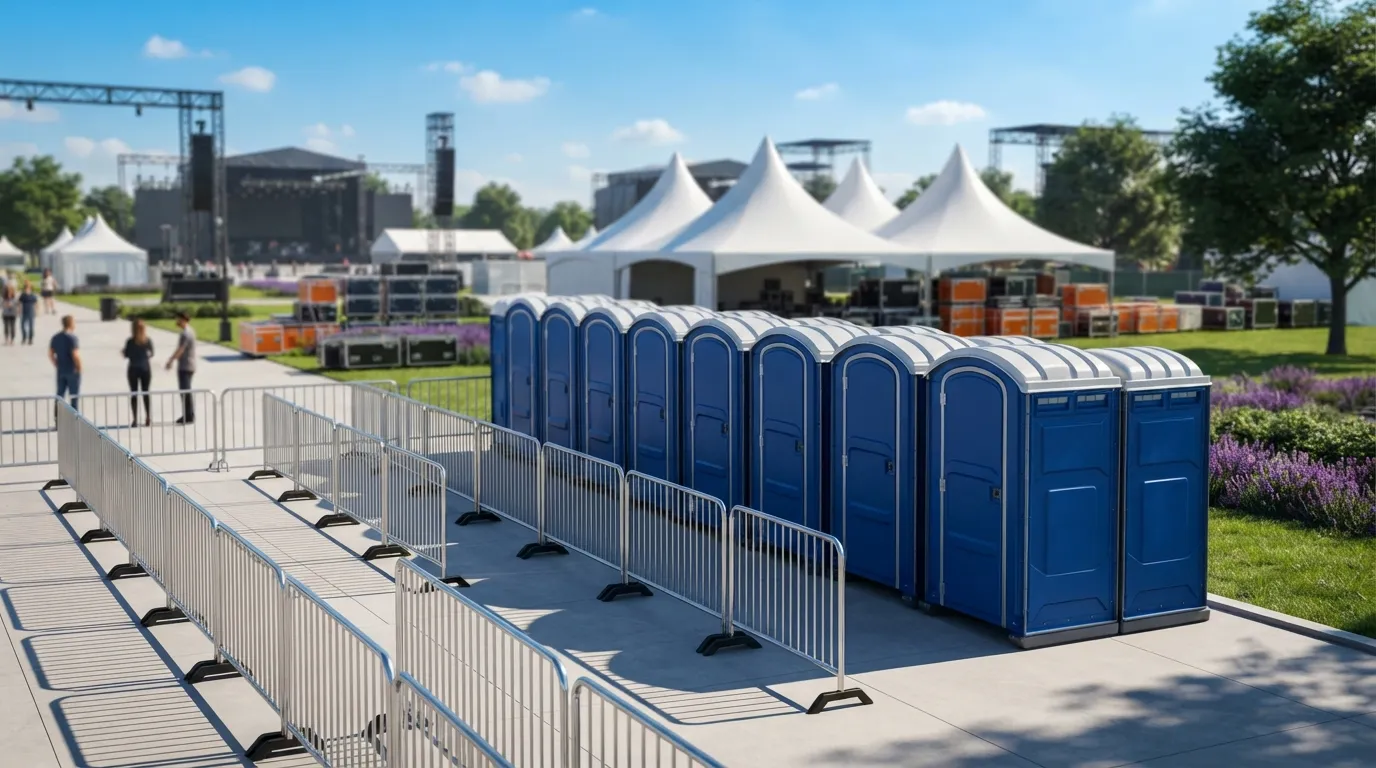
A unit on a slope will drain wrong, rock when used, and service badly. ADA Standards 302.1 calls for stable, firm, slip-resistant surfaces on accessible routes, and that standard is a good baseline even for standard units without an ADA requirement attached. Flat gravel or a compacted pad beats a grassy slope every time, especially once fall rain softens the ground around Warren. If a location has no good flat spot, ask about plywood or mats under the unit rather than forcing it onto a hillside. This matters more for restroom trailers and luxury restroom trailer setups, since they carry plumbing and need to stay level to drain correctly, and it matters for temporary fence rental too, since panels on soft ground lean and fall in wind. Crews doing septic pumping service work face the same ground concerns; a truck stabilizing over a tank needs firm footing just like a delivery truck does, whether that is here in Warren or on a service call as far off as a Placerville septic pumping service job.
FAQs
Can I place a porta potty on the street in front of my house?
Usually not without checking first. Curb and right-of-way placement needs confirming with the City of Warren, since sidewalk and street rules differ from private-lot placement. Driveways and yards are simpler and rarely need anything beyond a level spot. Call ahead if your only option is the street side.
How far from the building does a portable toilet need to sit?
There is no fixed distance, but service access matters most. Keep it reachable for the pump truck and clear of doorways or windows that open outward. For construction sites, OSHA 1926.51(c) drives unit count more than distance from structures.
Do restroom trailers need a different surface than standard units?
Yes. Trailers need a level pad wide enough for the tow vehicle and stable enough to keep plumbing draining correctly. Standard units are lighter and more forgiving on gravel or grass. Ask about your specific site before booking a trailer over a toilet.
What happens if the ground is too soft when the truck arrives?
The crew may need to reschedule or use mats to protect the unit and your yard. Soft ground after rain is the most common placement problem in Warren. Flagging soft spots when you book saves a wasted trip.
Does a dumpster need the same clearance as a restroom trailer?
Roughly, yes. Both need a level pad and a straight approach, with dumpsters needing about 60 feet behind the truck to set down safely. Trailers need similar backing room but less overhead clearance than a full-size roll-off truck requires.
Next step
Get a delivery date
Tell us the address, the dates and the headcount. We size the order and confirm the route.